Energy practice, as limenra covers it, means traditions in which a practitioner works with a subtle energy or life-force — Reiki is the clearest example — and the honest way to hold all of them is this: they are disciplines with histories, lineages, initiations and precepts, and what they claim about the body and mind is what the tradition holds, not what anyone has demonstrated. You can learn a system properly, practise it seriously, and still be unable to say whether anything beyond the practitioner's own experience is happening. The useful questions are therefore historical and practical rather than evidential: where did this come from, what does initiation actually commit you to, what does a session involve, and what does it cost you in money and time.
What "energy practice" actually names, and why Reiki is the reference case
Reiki is a Japanese spiritual healing practice created in the early 20th century by Mikao Usui, involving the laying on of hands and the channeling of what practitioners call universal life energy as a form of spiritual therapy. Almost every other system you will meet in the English-speaking world either descends from it, borrows its vocabulary, or defines itself against it — which is why it is the right place to start and the right thing to measure the rest against. If you understand what Reiki is and is not, you can place most of the adjacent practices quickly.
The thing to internalise first is that Reiki is a spiritual system in its own self-description, not a medical one. Usui Reiki Ryōhō, the original form, was structured as a spiritual discipline with precepts, levels of initiation, and hand positions for treatment, transmitted to students in Japan and later adapted in the West. Precepts come before hands. Initiation comes before practice. That ordering is not decorative — it is the tradition's own account of what the practice is, and it is the part most often stripped out when Reiki is sold in the West as a relaxation add-on.
The limits of this framing matter. Calling Reiki a spiritual discipline does not make claims about it true or false; it tells you what kind of claim is being made. A tradition can be historically well documented, internally coherent, and still rest on a premise — universal life energy channeled through the hands — that is not available to ordinary verification. Treat that as the ground condition of the whole subject rather than a problem to be solved once and forgotten.
Where it comes from, and why the history is contested rather than settled
Mikao Usui founded Usui Reiki Ryōhō as a spiritual healing system on Mount Kurama in 1922, following a retreat and enlightenment experience there in March of that year, from which organised teaching and initiation lineages developed. Usui lived from 1865 to 1926 and is credited in historical and academic literature as the founder. Those are the anchor facts, and they are unusually solid for a tradition of this kind — but only up to a point.
The evidence base is small and you should know its shape before you trust any confident origin story, including the ones told in attunement classes. Academic work on Reiki history identifies a small set of primary documents as central: the 1927 Usui Memorial Stone inscription, a 1904 curriculum vitae of Usui, the 1928 account by Okuna, and the oral and written narrative transmitted by Hawayo Takata in the 1970s. That last item is the one most Western practitioners actually learned, and it is also the latest and most heavily shaped by transmission through a single teacher into a new culture.
What this means practically: when a teacher tells you the precise circumstances of Usui's enlightenment, or exactly what he taught on which day, you are usually hearing Takata's 1970s narrative or a later elaboration of it, not the 1927 stone. That does not make the narrative worthless — oral transmission is how this tradition has always moved — but it does mean origin stories function as lineage identity rather than as archival record. A teacher who can tell you which of those sources their version comes from is showing you something real about how they work.
Chujiro Hayashi sits at the hinge of the Western story. A Japanese Reiki teacher and physician who studied under Usui, he systematised Usui Reiki Ryōhō into a clinical-style practice and played a key role in transmitting the tradition to Hawayo Takata and thus to Western countries. The shift from Usui's precept-centred spiritual discipline to Hayashi's clinical-style systematisation is the single most consequential change in the tradition's history, and it explains why Japanese-lineage practice and Western Reiki can feel like different things wearing the same name.
The decision that comes first: Japanese-lineage practice or Western Reiki
Choose Japanese-lineage practice if you want the precepts, the discipline and the initiatory structure to be the centre of the thing; choose Western Reiki if you want a hands-on session practice you can use on other people relatively soon. The two are not opposites, but they are taught differently, priced differently, and they ask different things of you. Getting this wrong is the most common expensive mistake in the subject.
Japanese-lineage teaching tends to keep Usui Reiki Ryōhō's original architecture — precepts recited and worked with, levels of initiation taken seriously as commitments rather than as certificates, hand positions taught as a fixed sequence within a spiritual discipline. Western Reiki, descending through Takata, tends to be organised around attunements and session work, with more emphasis on practising on others and less on the precept work. Neither is a corruption; both are defensible readings of the same transmission. But the flavour of your first year will be completely different depending on which you walk into.
The honest trade-off: Japanese-lineage study is often slower, harder to find, and less likely to give you a certificate you can put on a website. Western Reiki is abundant, faster, and more likely to leave you with hand positions and no idea what the precepts are for. If you are drawn to the practice as a spiritual discipline, the slower route is the one that will hold your interest; if you are drawn to it as a way of working with people, the Western route gets you there sooner and you can add the discipline later.
Initiation, levels and what an attunement does and does not do
An attunement, in the tradition's own account, opens a capacity to channel the energy; it does not confer skill, judgement or authority, all of which come from practice and from the precepts. That distinction is the one to hold onto, because the market around attunements is where most of the money and most of the disappointment live. Levels exist and their number and names vary by lineage; what they signify is a stage of initiation and permission to practise and teach, not a qualification in any external sense.
What practitioners report after attunement varies widely and is described in the tradition as an opening or a shift rather than a measurable change. Some describe heat in the hands, some describe nothing at all for weeks, some describe emotional upheaval in the days afterwards. Treat all of this as report, and treat any teacher who promises you a specific outcome — that you will feel the energy immediately, that a particular level will change your life — as someone overselling a genuinely modest initiatory rite.
The costs are concrete and worth naming. Attunements are the main revenue of many Reiki teachers, and the price ladder from first level to master is where the largest sums are spent. The trade-off is real: paying for initiation is how the tradition has always funded itself, and a teacher who has invested years in their own training deserves to be paid. But there is no correlation between what you pay and what you receive beyond the quality of the teacher in front of you, and a very expensive master level from a teacher you have not sat with is money badly spent. Sit in a session or a class first. If a teacher will not let you do that, that is your answer.
What a session involves, and how to tell a careful practitioner from a careless one
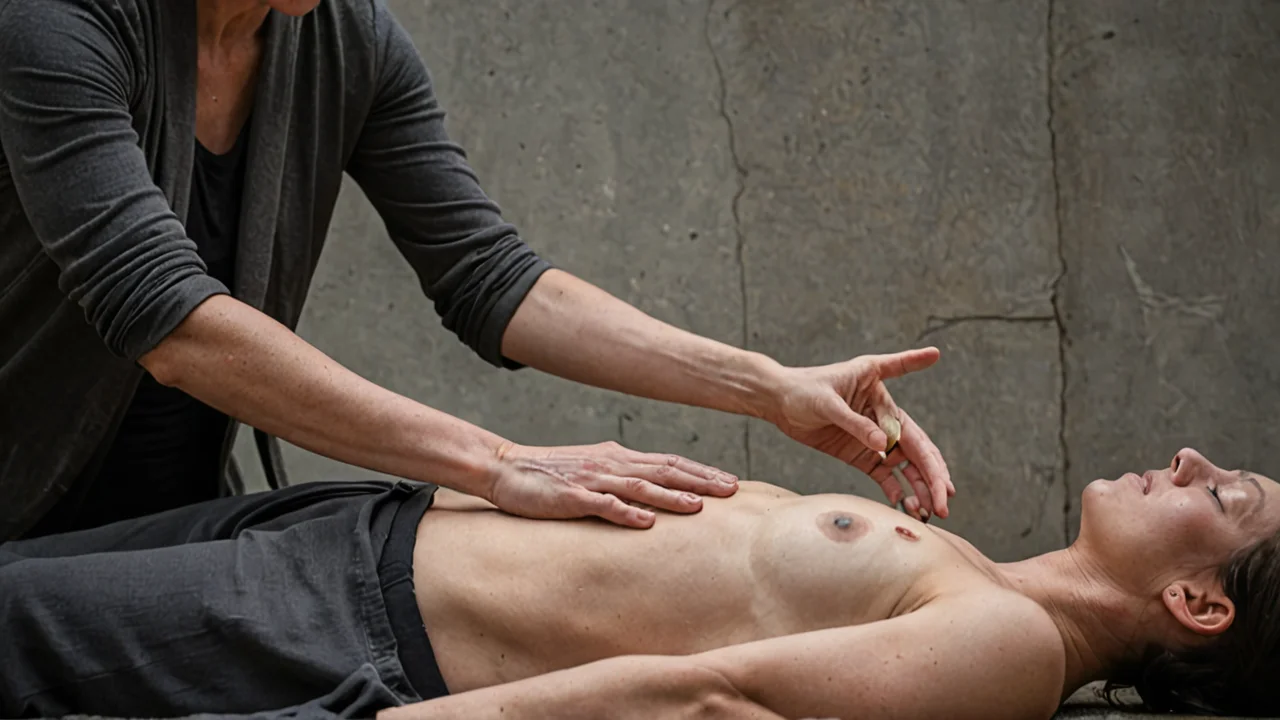
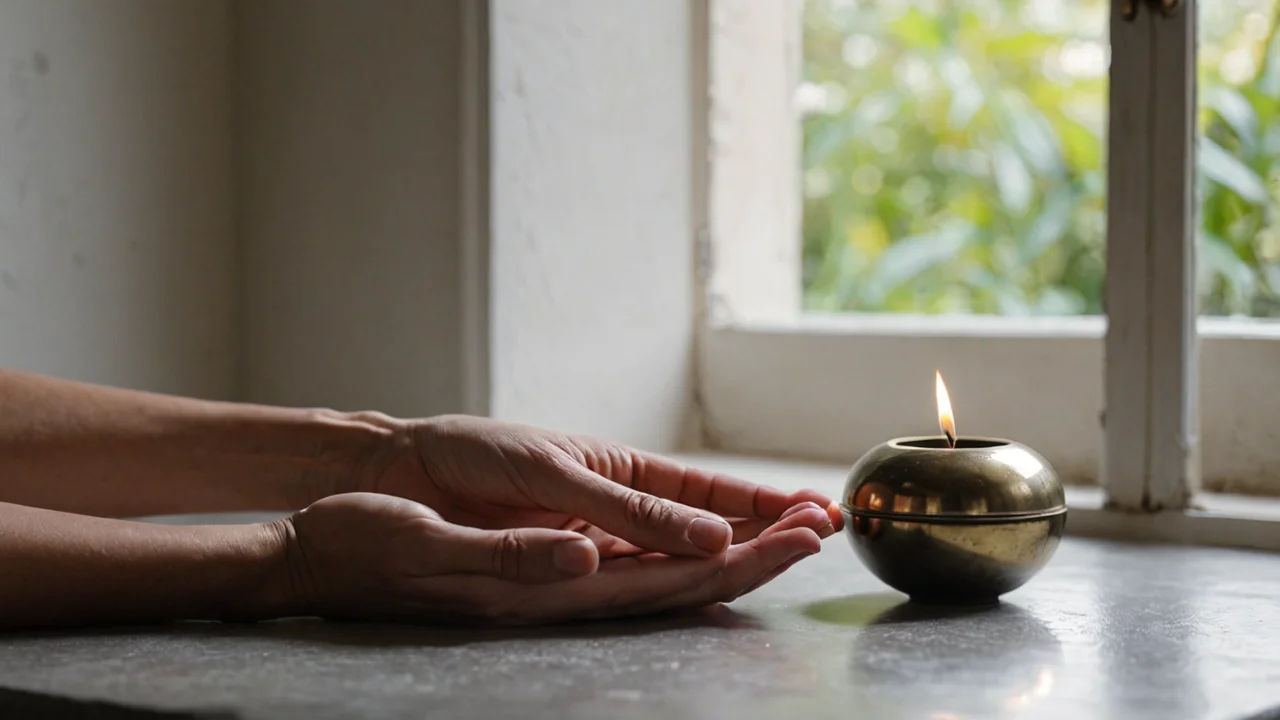
A standard session is simple to describe: the recipient lies clothed on a treatment table, the practitioner places hands in a sequence of positions — head, shoulders, torso, limbs — and holds each for a period, often several minutes, in silence. That is the whole of the mechanism in the tradition's terms. Nothing is manipulated, nothing is diagnosed, nothing is prescribed. The simplicity is the point and also why the quality of a session depends almost entirely on the practitioner's attention rather than on any technique.
What you should notice in a careful practitioner: they ask what you want from the session and whether you have any relevant conditions, they tell you what they will do and where they will put their hands, they offer you the option to stop, and they do not make claims about curing anything. What should make you leave: any suggestion that Reiki replaces medical treatment, any diagnosis of your condition by feel, any pressure to buy further sessions or levels before you have had a chance to think. This is a spiritual practice, not a therapy, and a practitioner who cannot hold that line is a risk to you and to the tradition's reputation.
What recipients report is wide and worth taking at face value as report: warmth, deep relaxation, sometimes sleep, sometimes nothing notable. The tradition holds that the energy goes where it is needed; a practitioner who tells you what your body "told" them is adding a claim the tradition does not require them to make. You are allowed to enjoy a session and remain agnostic about its mechanism, and most long-term practitioners do exactly that.
Related practices, and how to read the wider field without being sold something
Once you move past Reiki, the vocabulary gets looser and the claims get larger. Chakra work is the most common neighbour, and the standard example is worth knowing precisely: in Hindu yogic traditions, Ajna is the sixth primary chakra in the subtle body, translated as "authority" or "command" and commonly called the "brow" or "third eye" chakra, said to be situated in the centre of the forehead between the eyebrows and associated with intuition and intellect. Note the grammar — said to be, associated with. That is the register a careful teacher uses and the one you should expect.
The test for any adjacent practice is the same one you applied to Reiki's history. Does the teacher know where their system comes from, and can they distinguish what the tradition holds from what is established? Does the price ladder reward practice or reward upgrading? Is there a precept structure, a lineage, or a stated discipline — or only attunements and sessions? A system with no history, no discipline and a steep price ladder is not a tradition you are joining; it is a product you are buying.
The wider field is not all noise. There are serious lineages in Japanese energy work, in yogic subtle-body traditions, and in several other systems, and they share the features that make Reiki worth studying: documented origins, an initiatory structure, precepts that ask something of the practitioner, and a willingness to describe their claims as the tradition's claims. The cost of staying with those systems is that you will wait longer for the dramatic experiences and pay less for certificates. The benefit is that you will still be practising in ten years.
Money, time and the shape of a serious practice
Budget for a first year that is mostly teaching, not attunements: a class or a course, a few sessions with a practitioner you are considering studying with, and the time to practise daily on yourself before you touch anyone else. The tradition's own structure — precepts, then initiation, then hand positions — is a sequence for a reason, and the most common failure is people taking a high level before they have practised at all. A level is permission, not competence, and competence comes from repetition.
Time is the real cost and the one most often underestimated. Reiki as a discipline asks for daily practice, not weekly sessions; the precepts are meant to be worked with, not recited once at an attunement. If you cannot give it twenty minutes a day for a few months, you are not ready for initiation and you should not pay for one. The trade-off is honest: this is a slow practice that will not transform your life on a schedule, and anyone who tells you otherwise is selling you the attunement rather than the discipline.
What you can reasonably expect, held carefully: a practice you can do with your hands and your attention, a lineage you can trace through Usui, Hayashi and Takata to whichever teacher is in front of you, and a set of precepts that ask you to be a certain kind of person. What you cannot expect is proof, a cure, or a shortcut. The tradition holds that the energy does the work; the practitioner's job is to show up, keep the precepts, and not overstate what they know. That is a modest and durable thing to build a practice on, and it is the standard by which every choice on this page should be made.