Reiki is a Japanese spiritual healing practice in which a practitioner lays hands on or near a recipient and channels what the tradition calls universal life energy. It was created in the early 20th century by Mikao Usui, who founded Usui Reiki Ryōhō as a spiritual healing system on Mount Kurama in 1922, and it is taught today through initiations, precepts, and set hand positions rather than through any licensed credential. What follows is the whole shape of the thing: its history, the levels of initiation, what actually happens in a session, how the lineages diverge, and where the honest limits sit.
The founding story and what the historical record actually contains
Usui Reiki Ryōhō was established in March 1922, after Mikao Usui (1865–1926) undertook an intensive retreat on Mount Kurama near Kyoto and emerged with what the tradition describes as an enlightenment experience. That date and that location are not in dispute among historians of the practice. What is in dispute is almost everything else about the founder's life, because the evidence is thin and partly devotional.
Academic work on Reiki history identifies a small set of primary documents as central for reconstructing the tradition's origins: the 1927 Usui Memorial Stone inscription, a 1904 curriculum vitae of Usui, the 1928 account by Okuna, and the oral and written narrative transmitted by Hawayo Takata in the 1970s. That is the whole evidentiary base, and it is worth understanding what each piece is. The memorial stone is a commemorative inscription carved by students a year after Usui's death — affectionate, formal, and not a biography in the modern sense. The curriculum vitae predates Reiki entirely. Takata's narrative is the latest of the four by roughly half a century and is the source most Western practitioners actually absorbed, which is why so many Western Reiki stories turn out to be Takata's account rather than anything from 1920s Japan.
The practical consequence for a reader: if you encounter a detailed biography of Usui — his earlier career, his travels, the specifics of what he studied — treat it as tradition rather than record unless it traces to those four documents. Devotional Reiki material and skeptical debunking both tend to overstate how much is known. The honest position is that Usui founded a spiritual discipline in 1922, taught students, and died in 1926, and that the transmission to the West ran through a specific chain of people whose roles are documented.
That chain matters. Chujiro Hayashi, a Japanese Reiki teacher and physician who studied under Usui, systematized Usui Reiki Ryōhō into a clinical-style practice, and he is the figure who transmitted the tradition to Hawayo Takata and thus to Western countries. Hayashi's medical background is the reason Reiki arrived in the West wearing clinical clothing — treatments organized around specific hand placements, sessions run on a schedule, a practice that looked like it belonged in a clinic. Whether that systematization preserved Usui's original emphasis or shifted it is a live question in Reiki historiography and one you will form your own view on as you read further.
The levels of initiation, and what each one actually costs you
Reiki is transmitted through initiation rather than instruction, and the tradition is structured in levels, each conferred by a teacher. In the West the standard structure runs three or four steps depending on lineage — commonly First Degree, Second Degree, and Master, with Master sometimes split into a practitioner level and a teaching level. The Japanese original, Usui Reiki Ryōhō, is structured as a spiritual discipline with precepts, levels of initiation, and hand positions for treatment, transmitted to students in Japan and later adapted in the West. The adaptation is where the familiar Western ladder came from, and it is more elaborate than what Usui taught.
First Degree is the physical level: the hand positions, the precepts, and the initiation that the tradition holds opens the practitioner to the energy. It is the degree you need to treat yourself and to lay hands on family and friends. Almost everyone who practices Reiki at all stops here, and that is not a failure state — it is the level the practice is designed around. The precepts are usually recited daily and are the part practitioners say changes them most, not the hand work.
Second Degree adds what the tradition calls symbols and distance work — the ability to send Reiki to someone not physically present, and to treat mental or emotional patterns rather than just physical placement. This is the degree that divides practitioners. Some find distance work the most meaningful part of the practice; others find the symbolism sits awkwardly against the plain hand-on-body simplicity of First Degree and never use it. Both positions are common and neither is heterodox.
Master level is where the money and the time really go. In most lineages Master is what permits you to initiate others, which means it is a teaching credential, and the training is correspondingly longer and more expensive. The trade-off is straightforward: if you want to treat yourself and your household, First Degree is sufficient and Master is a large expense for a capability you will not use. If you intend to teach or to run a practice, Master is the entry requirement, and the cost is the cost of a professional qualification, not a hobby purchase. Prices vary enormously by teacher and country and are not something to take a figure on from a page like this one — ask two or three teachers directly and compare what the fee includes, because attunement-only weekends and long apprenticeships are sold under the same degree names.
One thing to check before paying for any level: the lineage. Reiki transmission is a chain of initiations, and a teacher should be able to name theirs back to Usui through Hayashi and Takata or through a Japanese line. This is not gatekeeping for its own sake — the chain is the entire mechanism by which the tradition claims the practice is transmitted, so a teacher who cannot recite it is either working outside the tradition or has not been properly initiated themselves. Ask. A good teacher answers immediately and without offense.
What happens in a session, and why the sequence is what it is
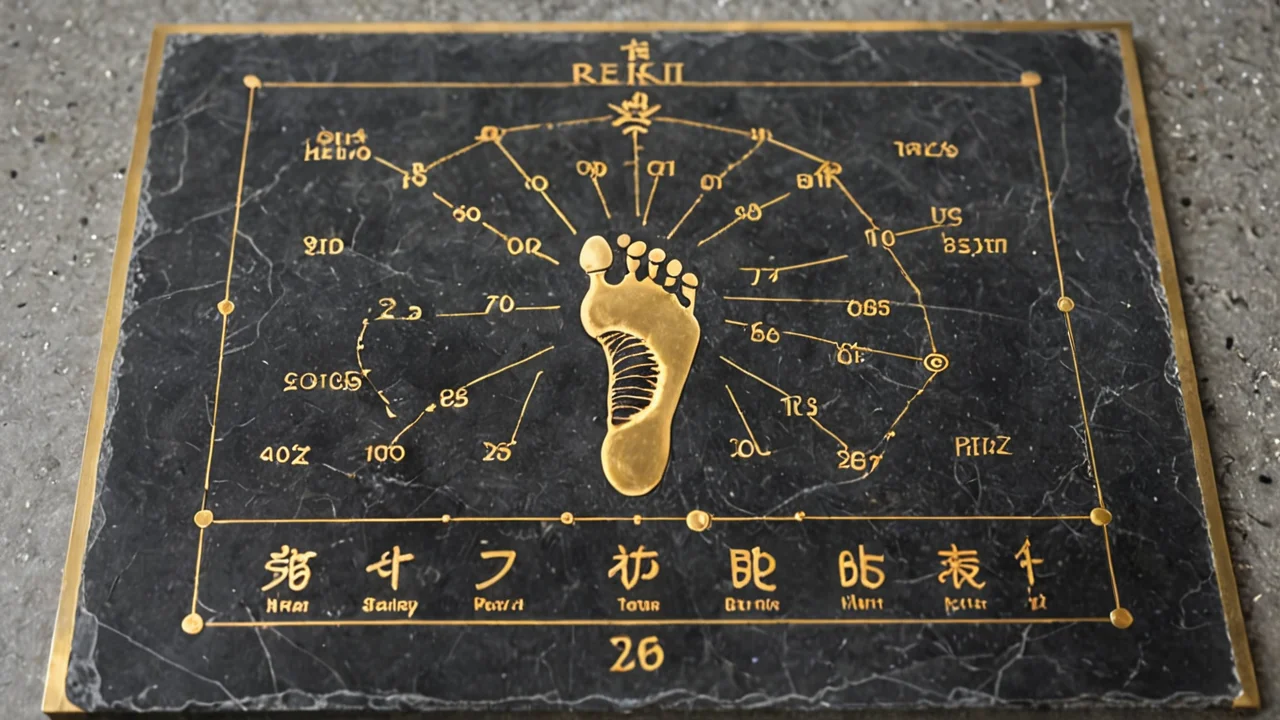
A standard session runs somewhere between forty-five minutes and an hour and a half, with the recipient fully clothed and usually lying on a treatment table. The practitioner works through a fixed sequence of hand positions — head, face, throat, chest, abdomen, and then the back — holding each for a few minutes. The full set of positions taught at First Degree is commonly around a dozen, and a complete treatment moves through all of them. Nothing is diagnosed, nothing is manipulated, and no pressure is applied. The hands rest lightly or hover slightly above the body.
The sequence is not arbitrary. The positions follow the body's major regions in an order that lets the practitioner finish at the feet or the back, and the tradition holds that the energy goes where it is needed regardless of where the hands are placed — which is why some practitioners shorten the sequence substantially and let intuition guide placement. Beginners are usually told to keep to the fixed sequence for a good while first. The reason is practical rather than mystical: a fixed sequence means you are not improvising while you are also learning to sit still and pay attention, and it gives you a baseline you can notice changes against.
Recipients report a range of sensations — warmth, tingling, heaviness, emotional release, or nothing at all. The tradition holds that the energy flows whether or not anything is felt, so a session with no sensation is not a failed session. Practitioners describe feeling less tension afterwards, and recipients often report deep relaxation and sometimes fall asleep. What the tradition claims and what people report are the two things that can honestly be said here; the practice is not a treatment for any medical condition and should never replace care from a physician. If you have a health concern, Reiki sits alongside medical treatment or it does not sit anywhere.
The self-treatment practice is the part most outsiders never hear about. First Degree practitioners are taught to treat themselves daily, running through a shortened sequence of positions on their own body, usually in the morning or before sleep. This is the actual daily discipline of Reiki — not the occasional session for a friend, but a short self-practice done consistently. Practitioners who keep it up describe it as the anchor of the whole thing; practitioners who let it lapse usually find the rest of the practice goes with it.
Usui Reiki Ryōhō, Hayashi's clinical line, and Takata's Western adaptation
There are three distinguishable things traveling under the name Reiki, and knowing which one you are looking at explains most of the confusion about how it should be taught. The first is Usui Reiki Ryōhō, the original form developed by Mikao Usui — a spiritual discipline with precepts, initiations, and hand positions, taught in Japan and oriented toward personal spiritual development as much as toward treating others. The second is the Hayashi line: clinical-style, systematized by a physician, organized around treating others and around a practice that could be run on a schedule. The third is the Western form descended from Hawayo Takata's 1970s transmission, which added the fixed degree structure, the fees, and much of the symbolic vocabulary Western practitioners now take for granted.
The differences are not cosmetic. Japanese-line practice tends to be quieter about symbols, more focused on the precepts and on daily self-practice, and less interested in the degree ladder as a mark of status. Western-line practice tends to be more structured, more commercial, and more likely to treat Master level as the natural goal. Neither is fake, and the historical record does not support the claim that one is the "real" Reiki and the other a corruption — the tradition genuinely developed differently in two places, and both developments trace to Usui through documented teachers.
For a reader choosing a teacher, this is the single most useful thing to establish early: which line the teacher comes from, and whether their teaching style matches what you actually want. If you want a daily spiritual discipline with minimal ceremony, a Japanese-line teacher is likely a better fit. If you want a structured path with clear levels and a community of practitioners, the Western lineage delivers that. The cost of choosing wrong is a few hundred dollars and a year, which is not nothing but is recoverable.
The chakra vocabulary, and how far it actually belongs to Reiki
Reiki as Usui taught it does not contain the chakra system. The chakra framework comes from Hindu yogic traditions, and it entered Western Reiki through the same mid-century blending that produced most popular Western energy work. Standard encyclopedic descriptions of Hindu yogic teachings describe Ajna as the sixth primary chakra in the subtle body, translated as "authority" or "command" and commonly called the "brow" or "third eye" chakra; it is said to be situated in the center of the forehead between the eyebrows and associated with intuition and intellect. That is a Hindu teaching, not a Reiki one.
This matters because a great deal of Western Reiki instruction presents chakra work as integral to the practice, and a reader can reasonably conclude that Reiki without chakras is incomplete. It is not. The tradition holds that Reiki goes where it is needed without the practitioner directing it, which makes chakra-by-chakra treatment a parallel system rather than a required one. Plenty of experienced practitioners use chakra language as a convenient map for where to place hands and for talking about what recipients report; plenty of others never mention it. Both are working within the tradition as it actually exists.
If a teacher insists that chakra work is essential to Reiki, that is a statement about their particular synthesis, not about Reiki's history. It is not a reason to walk away — a synthesis can be coherent and useful — but it is a reason to know what you are being taught. The honest framing is that the brow center and the other chakras belong to a different tradition that Western Reiki borrowed from, and that the borrowing is recent enough to be traceable.
What the practice is claimed to do, what people report, and where the honest limits sit
Reiki is a spiritual practice, and the tradition's claims about it are spiritual claims. It is held to channel universal life energy for healing, and practitioners describe effects on themselves and on recipients that range from the subtle to the profound. Those descriptions are worth taking seriously as reports of experience. They are not evidence that Reiki treats, cures, or improves any medical or psychological condition, and no responsible teacher will tell you otherwise. Anyone who does — who suggests Reiki instead of a doctor, or who promises a specific outcome for a specific illness — is operating outside the tradition's own boundaries and should be avoided.
The realistic picture of what Reiki costs and returns: a First Degree course is typically a weekend, a session is typically an hour, and the daily self-practice is typically a short sequence done twice a day. In exchange, practitioners report deep relaxation, a steadier emotional baseline, and a structured contemplative practice that fits into ordinary life without requiring retreat or renunciation. Recipients often report the same relaxation, and some report emotional release during a session. Whether that constitutes healing in any sense beyond the spiritual is a question the tradition answers one way and medicine answers another, and the two answers do not have to be reconciled for the practice to be worth doing.
The wrong choice is to treat Reiki as a substitute for something it is not — medical care, therapy, or a cure for a condition that needs treatment. The other wrong choice is to treat it as nothing, a placebo dressed in Japanese clothing, which dismisses a century-old discipline that has given a great many people a workable daily contemplative practice. The middle position, which is where most serious practitioners actually sit, is to do the practice, keep the precepts, treat yourself and the people who ask, and hold the tradition's claims as the tradition's claims rather than as facts about the body.
If you are deciding whether to begin, the sequence that makes sense is this: read the precepts first, since they are the part of Reiki that requires no initiation and no teacher and will tell you quickly whether the practice's orientation suits you; then find a First Degree teacher whose lineage you can trace and whose teaching style you have actually experienced, ideally by receiving a session from them before you pay for a course; then commit to the daily self-practice for a few months before deciding whether Second Degree is worth the additional cost. Most people who are going to stay with Reiki know within that window. Most people who are not will have saved themselves the Master-level fee.